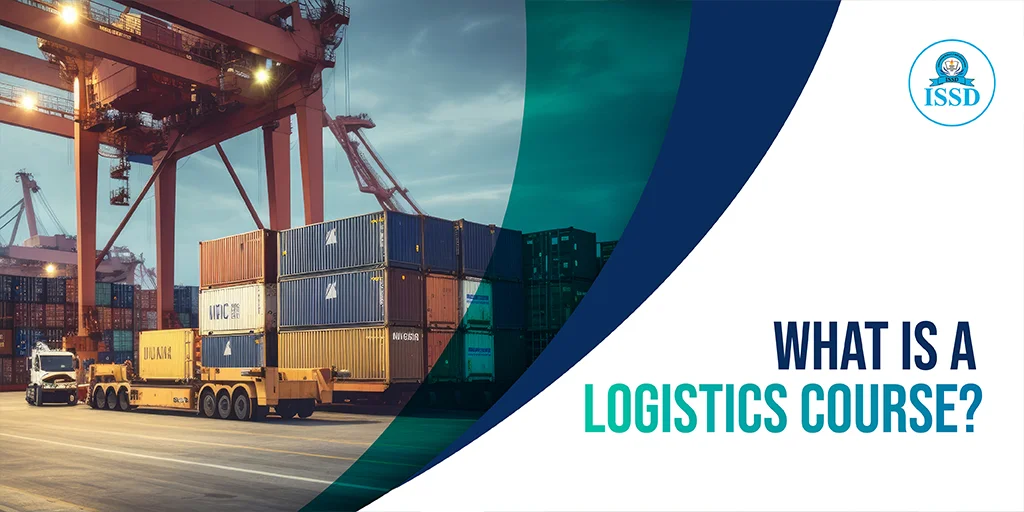
What Is A Logistics Course?
Choose Logistics in 2026 – Launch Your Career with ISSD’s Diploma in Supply Chain, Warehouse & Logistics Management
If you are searching for a logistics course and want to understand exactly what a logistics and supply chain career looks like today, this guide will give you a clear, practical and job-focused explanation.
This blog focuses mainly on the logistics course side of the industry, while also explaining how a modern logistics and supply chain course builds long-term career opportunities through warehousing and distribution operations.
You will also learn how the Diploma in Supply Chain, Warehouse & Logistics Management offered by International School of Skill Development (ISSD) prepares learners for real operational roles in logistics.
Logistics is the function that plans, controls and manages the movement and storage of goods from suppliers to customers.
In simple terms, logistics ensures:
- correct products move through the system
- transportation is planned and executed
- warehouses handle goods safely and efficiently
- inventory levels are maintained accurately
- orders are delivered on time
Today, logistics is not only about transport. It also includes:
- warehouse management
- inventory management
- order processing
- distribution planning
- documentation and compliance
- coordination with vendors and service partners
That is why most companies prefer candidates who complete a professional logistics management course or a structured logistics certification course instead of learning on the job alone.
A logistics and supply chain course combines two connected functions:
Supply chain
This covers procurement, sourcing, material flow and coordination between departments and partners.
Logistics
This covers execution – transportation, warehousing, stock movement, documentation and delivery.
A modern logistics and supply chain management course teaches learners how both these functions work together in real business environments.
For learners whose main interest is logistics operations, a focused logistics course gives them job-ready operational skills.
The demand for trained logistics professionals has increased rapidly because of:
- growth of e-commerce and quick commerce
- expansion of organised warehousing
- international trade and import–export operations
- manufacturing and retail distribution networks
- technology-based logistics and tracking systems
Companies today look for candidates who understand:
- logistics processes
- warehouse workflows
- inventory control systems
- transportation coordination
- digital documentation
This is why enrolment in a supply chain management and logistics course has grown steadily in India.
What Do You Learn in a Professional Logistics Course?
A job-oriented logistics course focuses on operations rather than theory. Core learning areas usually include:
- transportation planning and coordination
- route planning and delivery scheduling
- warehouse operations and storage methods
- material handling and dispatch procedures
- inventory management techniques
- stock verification and reconciliation
- logistics documentation and compliance
- coordination with vendors and internal teams
A strong logistics and warehouse management course prepares learners to handle daily operational challenges.
A professionally structured logistics course is suitable for:
- students after Plus Two or graduation
- job seekers aiming for logistics jobs
- working professionals shifting into operations roles
- career-returning candidates looking for stable industry careers
No prior logistics experience is mandatory for most entry-level logistics programs.
Career Scope After a Logistics Course
After completing a recognised logistics management course or logistics and supply chain course, learners can apply for:
- logistics coordinator
- warehouse operations assistant
- dispatch executive
- inventory controller
- distribution coordinator
- logistics support executive
These roles are available in:
- logistics service providers
- warehouses and fulfilment centres
- manufacturing companies
- retail and wholesale chains
- e-commerce companies
With experience, professionals move into supervisory, planning and operations coordination roles.
Why Choosing the Right Logistics Course Matters
Not every logistics program prepares learners for real operations.
A good logistics certification course must include:
- practical logistics workflows
- warehouse process exposure
- real documentation formats
- case-based problem solving
- system-based working methods
This is where ISSD’s industry-oriented diploma becomes highly relevant.
The Diploma in Supply Chain, Warehouse & Logistics Management by International School of Skill Development (ISSD) is designed for learners who want a practical and career-focused logistics qualification.
This program functions as a comprehensive logistics and supply chain course with strong operational emphasis on logistics.
Unlike generic management programs, this diploma focuses on:
- warehouse and logistics workflows
- inventory handling processes
- procurement coordination
- documentation practices
- system-based operations
How This Diploma Builds Strong Logistics Skills
This professional program acts as a structured logistics management course and covers:
- logistics planning and distribution operations
- warehouse layout and operational processes
- inventory control systems and techniques
- material handling and storage practices
- logistics documentation and coordination
- interaction with transporters and vendors
This approach prepares learners for entry-level logistics and warehouse roles immediately after course completion.
The diploma includes international and academic alignment through:
- TÜV SÜD aligned certification
- academic recognition from JAIN & ARKA JAIN University
These certifications strengthen professional credibility for logistics, warehouse and supply chain roles.
A recognised logistics certification course helps employers quickly assess a candidate’s training quality and operational readiness.
Why ISSD Is a Strong Choice for a Logistics Course
ISSD has over three decades of experience in professional skill training and delivers industry-aligned programs in logistics, warehousing and operations.
For learners searching for a reliable logistics course in India, ISSD offers:
- trainers with real operational exposure
- curriculum designed around logistics workflows
- structured learning pathways for logistics careers
- strong academic and career guidance
This makes ISSD a preferred institute for learners planning to build long-term careers through a practical logistics course online or live training format.
Placement and Career Support
ISSD provides structured placement support that includes:
- résumé & professional profile development
- interview preparation & soft skills training
- employer outreach & job assistance
- guidance for logistics & warehouse job roles
This support helps learners transition smoothly into logistics operations roles.
(Placement support is provided without job guarantees.)
After completing a professional logistics and supply chain management course, entry-level salaries in India typically range between:
- ₹2.5 LPA to ₹4.5 LPA for logistics and warehouse operations roles
With experience and increased responsibility in inventory control, distribution planning and coordination, professionals progress to higher salary brackets.
Globally, logistics professionals earn higher compensation depending on country, sector and operational exposure.
Why the Diploma in Supply Chain, Warehouse & Logistics Management Is Ideal for Logistics Careers
For learners whose primary goal is a logistics career, this diploma offers:
- strong logistics operations exposure
- practical warehouse and inventory workflows
- real documentation and system familiarity
- coordination and execution skills
- process-based working discipline
How Logistics Careers Are Changing in 2026 and Beyond
Modern logistics professionals are expected to:
- use warehouse management systems
- understand digital documentation platforms
- coordinate across multiple service partners
- track inventory through automated tools
- support real-time delivery and fulfilment models
This is why enrolling in an updated logistics course or logistics management course online becomes essential for long-term career stability.
Many graduates realise that generic business degrees do not teach:
- warehouse operations
- inventory handling
- dispatch coordination
- logistics documentation
- real supply chain execution
A focused logistics and supply chain course fills this skills gap and improves employability.
Who Can Benefit Most From This Logistics Diploma?
This diploma is ideal for:
- fresh graduates looking for operational careers
- job seekers targeting logistics companies
- professionals from sales, retail or operations backgrounds
- career-returning candidates entering logistics and warehouse roles
Because the program is structured and workflow-based, it also works well as a logistics course online format for working professionals.
Final Thoughts – Is a Logistics Course Worth It?
A logistics career today is stable, scalable and globally relevant.
If you are planning to build a career in logistics, transportation coordination, warehouse operations and inventory management, a structured and industry-aligned logistics course is one of the most effective pathways.
The Diploma in Supply Chain, Warehouse & Logistics Management offered by International School of Skill Development (ISSD) gives you exactly what employers look for:
- operational readiness
- logistics workflow knowledge
- warehouse and inventory competence
- professional certification support
For learners serious about entering and growing in logistics, this diploma offers a practical and trusted route into the industry.
Disclaimer: Salary figures are based on available online data from google insights, AmbitionBox, Naukri, Indeed, Glassdoor, and hospital job postings, and may vary slightly in real-time scenarios. Actual salaries vary depending on experience, certifications, your skills, job location, and the type of role.