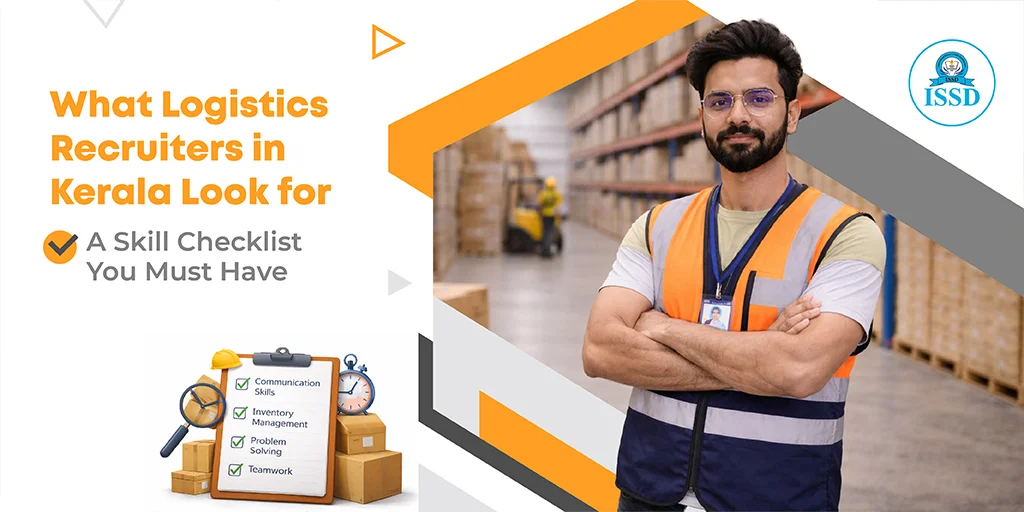
What Logistics Recruiters in Kerala Look for: A Skill Checklist You Must Have
If you are looking to build a career in logistics, it is important to understand from the very beginning that getting proper training is the first step. Let’s see why. As we all know, Kerala’s logistics sector offers plenty of job opportunities; however, a large number of candidates apply for these vacancies every day. Recruiters don’t struggle to find candidates; they struggle to find job-ready candidates. That’s why your preparation for applying for logistics jobs becomes the most important factor.
This blog will help you identify the essential skill checklist you should have before applying for logistics vacancies or attending interviews.
Entry-Level Job Roles
- Logistics Executive / Logistics Trainee
- Operations Executive
- Supply Chain Executive (Junior)
- Warehouse Executive
- Documentation Executive
- Dispatch / Distribution Executive
- Logistics Coordinator
Mid-Level Logistics Job Roles
- Senior Logistics Executive
- Supply Chain Executive
- Transport Planner / Transport Coordinator
- Warehouse Supervisor
- Operations Supervisor
- Inventory Controller
- Logistics Analyst
Senior / Managerial Logistics Job Roles
- Logistics Manager
- Supply Chain Manager
- Operations Manager
- Warehouse Manager
- Distribution Manager
- Regional Logistics Manager
- Head of Logistics / Supply Chain Head
Now Let’s Look Why Skills Matter More Than Certificates
Always remember, logistics recruiters select candidates based on their abilities, which they demonstrate during interviews, not only through academic achievements or certificates. Even though a logistics certification is important, recruiters will always assess whether you can quickly learn the operational aspects of the role and whether you possess the required soft and technical skills. So, it’s essential that you purposefully acquire necessary knowledge, experience, and self-assurance, which will help you succeed in job interviews.
What Do Recruiters Really Expect from You?
Here is the reality that many students miss. Recruiters don’t expect perfection, but they do expect clarity. Recruiters check whether you can monitor product movements between locations while showing your ability to manage delivery delays and stop delivery errors from happening. They will assess your ability to describe complex processes through basic explanations. And also they will check all your activities during your entire interview or assessment process. Are you willing to learn? Can you take responsibility? Do you communicate clearly? Do you have basic knowledge of logistics management software, etc.?
Below Are The Skills Every Logistics Student Must Have
Let’s have a quick go-through on what all skills/requirements you should have in each level:
For Entry-Level Logistics Roles
- Basic knowledge of logistics and supply chain processes
- Handling orders and coordinating daily shipments
- Understanding basic logistics documents
- Using MS Excel and basic computer tools
- Working with logistics or ERP software (basic level)
- Clear communication with team members and vendors
- Accuracy and attention to daily operational tasks
For Mid-Level Logistics Roles
- Planning and managing shipments from start to finish
- Coordinating warehouse and inventory activities
- Planning transport routes and vehicle utilization
- Tracking logistics costs and expenses
- Knowledge of GST, E-way bills, and compliance rules
- Preparing reports using Excel and system data
- Supervising teams and solving operational issues
For Senior / Managerial Logistics Roles
- Planning logistics operations and supply chain strategy
- Controlling budgets and reducing logistics costs
- Managing vendors, transporters, and service contracts
- Monitoring performance using logistics KPIs
- Handling risks, delays, and contingency planning
- Leading teams and improving productivity
- Making business decisions and coordinating with stakeholders
Now Let’s check Why Are Technical Skills So Important Now?
Nowadays, most logistics operations are managed through systems. The recruitment process aims to find candidates who have experience using WMS (Warehouse Management Systems), TMS (Transportation Management Systems), GPS Tracking and Inventory Management Systems, Spreadsheets, Data Analytics Tool and ERP platforms. You need no specialized knowledge, but you must understand how these systems operate in regular business activities, which include inventory tracking, order management, transportation planning, and report production.
Students who demonstrate system knowledge will catch the attention of recruiters because these candidates appear ready for career growth.
Common Skill Gaps That Hold Students Back
Now, let’s see the most common gaps that students encounter:
- Having no experience with logistics management software
- Poor explanation of specified job roles that students are applying for
- Weak communication during interviews
- Lack of Basic Data Analysis & Spreadsheet Literacy
Why Candidates Get Rejected
Recruiters first check whether your resume reflects relevant skills and exposure. They also check whether you have enough soft skills like communication, problem-solving skills & basic knowledge on logistics management tools. During interviews, many candidates are rejected because they cannot explain basic processes, rely on memorized answers, lack both technical and soft skills, or have unrealistic expectations for entry-level roles.
So, as a bottom line let’s have a quick glance at the skills checklist.
Below are the essential points every student should focus on before applying for logistics jobs in Kerala:
- Professional communication and coordination skills improve interview and workplace performance.
- Technical familiarity with WMS, TMS, spreadsheets, GPS tracking, inventory management systems, and ERP systems is now a basic expectation.
- Strong understanding of logistics & supply chain processes is essential to meet real workplace demands.
- Clear awareness of job roles and daily responsibilities helps recruiters assess your readiness.
- Continuous learning and skill improvement help overcome rejections and support long-term career growth.
So, focus on strengthening your core skills by gaining practical exposure, improving system and process knowledge, learning logistics and supply chain software, and enhancing your communication skills. These efforts will significantly improve your confidence and career prospects. We hope this guide helps streamline your preparation for a successful career in logistics.